A Clear Way Through the Spread You’re Holding
Nightgate Tarot is a practical guide to laying out and reading a tarot spread — the two-card check-in, the three-card line, the full seven-card layout. Card meanings live here as a plain-spoken reference in service of a spread, not as a fortune. Draw, lay the positions out, read them in order, and decide for yourself what to do with what comes up.
This site is built for people who already own a deck, or are thinking about buying one, and want a straightforward answer to “okay, how do I actually use this thing.” If you’ve ever shuffled a deck, laid out three cards, and then stared at them without a clue how to connect them into an answer, that gap is exactly what Nightgate exists to close. It’s not aimed at people chasing a dramatic prophecy — it’s aimed at people who want a repeatable, plain-language method they can trust to be the same every time they use it.
Method first
Why a Spread, Not a Single Card
The layout carries the question
A card by itself is a picture. Put it in a position — “what’s ending,” “what’s next” — and it becomes an answer to something specific. Choosing the right spread for your question matters as much as anything you draw. The same card in the “past” slot and the “advice” slot means two genuinely different things, and most beginner confusion comes from skipping that step entirely.
Plain language, every time
Every card meaning here is written the way you’d explain it to a friend across a table — ordinary words first, symbolism second. No dramatic pronouncements, no invented mystique layered on for effect. If a description ever reads like it’s trying to impress you rather than explain something, that’s a sign it’s drifted from the method, not a sign the card is unusually powerful.
A tool for noticing, not predicting
A spread organizes your own thinking about a question you already have. It doesn’t forecast your week or your relationship. What you notice in the cards is worth sitting with — the deciding is still entirely yours. Think of it closer to a structured journaling prompt than a crystal ball: the cards give you a place to start looking, not a finished answer to copy down.
The spreads
Browse the Spreads
Start with the layout that matches your question, not the other way around. Each spread page walks through the positions, what each one is asking, and how to read the whole line together.
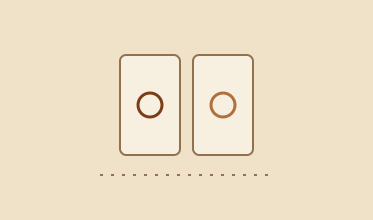
Two-Card Check-In
Two minutes, two positions: what’s true now, what’s asking for attention. Good for a fast headspace check, not a verdict on someone else.
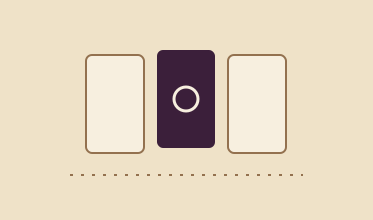
Three-Card Line
Past, present, next step, read left to right as one line. The most useful all-purpose spread for almost any open question.
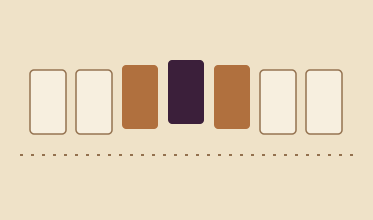
Seven-Card Spread
More positions, same method — it’s still a line, just a longer one. Good when a question has several moving parts you want to see at once.
Quick Love Spread
A small two-card draw aimed at your own headspace around a relationship — not a way to confirm what someone else feels.
A quick taste
A Few Cards, Explained the Nightgate Way
Every card page follows this same plain-language pattern: what the card shows, what it usually means, and how that shifts once you know which position it landed in.
The Tower
Usually shows up when something you built is already coming apart, fast. It doesn’t predict a disaster arriving out of nowhere — it names a collapse that was already underway before the card confirmed it.
Two of Cups
Points at a mutual connection — two people meeting each other roughly halfway. If it keeps showing up around the same person across several draws, that’s less about fate and more about where your own attention keeps landing.
Ten of Swords
Looks brutal and reads as rock bottom, but it usually means today already felt like the bottom before the card said so. There’s nowhere further down to go from here, which in practice means the only direction left is up.
The Star
A quiet-relief card — things have stopped actively falling apart and there’s room to breathe again. It’s not a promise that everything will work out; it’s a nudge that you have more room to plan than it felt like a week ago.
The Fool
Marks a genuine starting point — a step taken without knowing exactly how it turns out. It isn’t a warning to be careless, and it isn’t a green light either; it just names the fact that you’re standing at the edge of something new and untested.
How it works
A Reading in Three Plain Steps
Every spread on this site follows the same three moves, whether it’s two cards or seven.

1. Name the question
Write down what you actually want to know, as specifically as you can. “What am I not seeing about this job offer” reads better than “what should I do with my life.”

2. Choose a spread and draw
Pick a layout that matches the size of the question, shuffle, and lay the cards into position. A quick check-in needs two cards; a question with several angles might want seven.

3. Read it as one line
Read each card in its position, then read the positions together as a line, not three unrelated fortunes. The connections between cards usually matter more than any single meaning.
What Kind of Questions Can You Ask?
A spread works best with a specific, open-ended question — give it context and a rough timeframe if one matters, and stick to one topic per draw. A tarot spread can’t replace medical, legal, or financial professionals, and it can’t guarantee an outcome. Here’s what tends to work and what doesn’t.
Love and relationships
Try: “What am I bringing into this relationship that’s helping, and what isn’t?” or “What do I need to understand before I move on from this?”
Skip: “Does this person love me?” — a spread can reflect your own read of a situation, but it can’t report on someone else’s private feelings.
Work and money
Try: “What’s the real obstacle between me and this next career step?” or “What should I pay attention to before I make this change?”
Skip: “Will I be rich?” or “When exactly will I get promoted?” — a spread isn’t built for exact timing or financial forecasting.
Personal growth and decisions
Try: “What’s the pattern I keep repeating that I’d like to see more clearly?” or “What do I need to let go of before I can move forward with this decision?”
Skip: “Am I a good person?” or “What’s my purpose in life?” — too broad for a spread to give you anything you could actually act on.
Our method
Method, Not Mysticism
Every card meaning on this site is written the same way: what the image shows, what it tends to mean in plain terms, and how that shifts depending on the position it lands in. We don’t dress a card up as more dramatic than it is to make a reading feel more impressive, and we don’t soften a hard card into vague positivity either — the Ten of Swords still means something has bottomed out, it just also means the bottom is a place you can start reading from. That same rule applies whether the question behind the draw is light (“should I rearrange my week around this”) or heavy — the wording stays calm and specific either way, because a calmer description is a more useful one, not a less honest one.
There’s no certified way to read tarot, and we don’t pretend otherwise. This is one consistent, plainly explained method — the same card gets the same sober interpretation whether it lands in a two-card check-in or a seven-card spread, adjusted only for the position it’s sitting in, never for drama.
That consistency is also why the site is organized around spreads instead of a giant alphabetical card index. Reading a card in isolation invites you to treat it as a standalone verdict; reading it inside a spread you chose for a specific question keeps the method honest about what it can actually tell you. If two spread guides ever seemed to describe the same card differently, that would be a mistake worth reporting, not a sign the card is “moody.”
A common question
What About Reversed Cards?
If a card comes out of the deck upside down, you don’t need a second meaning to memorize. Read the same plain-language meaning as usual, then treat the reversal as a note that the theme is turned inward, delayed, or blocked rather than active. A reversed Two of Cups still points at a connection — it’s just one that’s stalled, one-sided, or waiting on something before it can move.
Plenty of decks and readers skip reversals entirely and read every card upright — that’s a completely valid choice, not a shortcut. Pick whichever approach you find easier to stay consistent with, and use it the same way every time you draw.
Limits, plainly stated
What a Spread Can and Can’t Do
We’d rather be blunt about the edges of this method than let you find them out the hard way. A tarot spread is a reflection tool, not an oracle, and it works best when you’re honest with yourself about which side of that line a given question falls on.
- Can help you organize scattered thoughts about a real decision you’re already facing.
- Can surface a pattern you keep circling back to without noticing.
- Can give you language for a feeling you hadn’t put into words yet.
- Can’t diagnose, treat, or offer any kind of medical opinion.
- Can’t tell you when something will happen, or guarantee that it will.
- Can’t replace a licensed professional for legal, financial, or mental-health decisions.
Why here
Why Nightgate
None of this replaces sitting with your own deck. It’s meant to make that time more useful — a plain reference you can check on your phone mid-spread instead of guessing at a symbol, and a set of layouts you can trust to ask the right-sized question.
No certification theater
No invented credentials or “master reader” branding — just a clearly explained method, spelled out so you could use it without us.
Spread-first structure
Every page is organized around a layout and a question type, not a scattered list of card meanings with no context for how to use them.
Genuinely free to use
The spread guides and card references stay free to read and use, with no paywall hidden behind a first free reading.
Reflection, stated as reflection
Every claim on this site is framed as a way to think something through, never as a guarantee about what happens next.
Frequently Asked Questions
Do I need my own deck to use these spreads?
No. The layouts and card meanings on this site work whether you’re using a physical deck at home, trying a free online draw, or just reading through a spread to understand how it’s built before you buy a deck of your own.
How do I know which spread to use?
Match the spread’s size to the size of the question. A quick two-card draw suits a fast check-in; the three-card line handles most open questions; the seven-card spread is worth the extra positions only when a question genuinely has several moving parts.
Can a spread tell me what someone else is thinking?
No. A reading reflects your own perspective on a situation, not a report on another person’s private feelings or intentions. Treat it as a way to think about your side of things, not a way to read someone else’s mind.
What if I pull a card that feels upsetting?
A hard-looking card usually names something already in motion rather than predicting new trouble. It’s worth sitting with, but it isn’t a diagnosis of any kind — if something feels genuinely heavy, that’s worth a conversation with a real professional, not a card.
Is this the same as a psychic reading?
No. Nightgate treats tarot as a structured self-reflection method, not a claim to psychic ability or fortune-telling. Nobody here claims to see your future — the method is about organizing your own thinking around a question you already have.
Where can I read about how this site handles my data?
See the Privacy Policy and Cookie Policy for details, and the Terms and Disclaimer for the rules and limits of using this site.
Can I reuse the same spread for the same question later?
Yes, and it can actually be useful — a repeat draw a few weeks later often shows how your own thinking has shifted rather than contradicting the first reading. Treat the difference as a signal about you, not a sign one of the readings was wrong.
Do I have to memorize all 78 cards before I start?
No. Each spread guide links to the plain-language meaning of any card that comes up in its examples, so you can look a card up the first several times you draw it instead of memorizing the deck up front. Most people pick up the frequent cards naturally after a handful of readings.
Pick a Spread and See What It Names
No sign-up needed to read the guides. Start with whichever layout matches your question, work through it at your own pace, and come back to it as often as you like. When you’re ready to try a live free reading instead of reading your own deck, the door’s open.