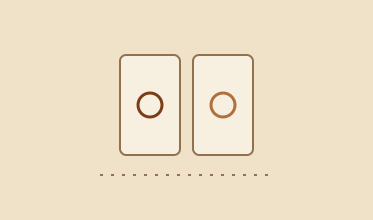
The two-card spread is the fastest layout on this site: two positions, one quick check-in on something that’s already on your mind. It isn’t built to answer a big life question in full — it’s built to give you a fast, honest read on where you stand right now, in about two minutes.
The Two Positions
Shuffle, then draw two cards and lay them side by side, left to right.
- First card — Where you stand. This card reflects the thing you’re actually weighing right now, as it stands today, not how you wish it looked.
- Second card — What’s in the way. This card points at whatever’s holding the situation back, or a piece of insight you’ve been talking around instead of facing directly.
Read the two together as one short sentence, not two separate fortunes: “here’s where I stand, and here’s what’s actually in the way.” That’s the whole method. If you want the fuller version of this same idea, see the three-card spread, which adds a third position for what comes next.
What This Spread Is Good For
Use it when you want a quick gut-check rather than a full sit-down reading: before a conversation you’re dreading, when you’ve been circling the same worry all day, or when you just want to know if today is a good day to make a small decision you’ve been putting off. It’s a two-minute exercise, not a two-hour one, and that’s the point — it works precisely because it’s small enough to do often.
It is not built for questions that need real nuance across several angles. If your question genuinely has multiple moving parts — a career change with three different factors pulling at once, say — the seven-card spread gives each factor its own position instead of squeezing them into two cards that can’t hold that much.
A Worked Example
Say the question is “should I say something about this at work tomorrow.” First card: the Four of Swords — a card about rest and stepping back rather than pushing forward. Second card: the Five of Pentacles — a card about feeling shut out or under-resourced.
Read together: where you stand is genuinely tired, not clear-headed, and what’s in the way is a real worry about being left without support if you speak up. That’s not an instruction to stay silent forever — it’s a fairly specific, useful observation: maybe tomorrow isn’t the day, and the actual blocker is a support question worth solving first. The cards didn’t decide anything. They just helped name what was already sitting underneath the question.
Common Mistakes With a Two-Card Draw
- Treating the second card as a verdict. “What’s in the way” names an obstacle — it doesn’t announce that the obstacle wins. What you do about it is still yours to decide.
- Asking a question about someone else’s feelings. This spread reflects your own read of a situation. It has nothing to report about what another person is privately thinking.
- Redrawing until you like the answer. If the first draw doesn’t sit well, that discomfort is worth noticing rather than shuffling past. A second draw on the exact same question mostly just adds noise.
Setting Up a Clean Draw
The two-card spread rewards a little bit of setup, even though it’s quick. Give the question one honest sentence before you shuffle — not a vague feeling, an actual sentence you could say out loud. Shuffle until it feels done rather than counting to a fixed number, and lay the two cards down before you look at either one, so the second card isn’t unconsciously nudged by your reaction to the first.
- Write the question down first. A written question is harder to quietly reshape mid-reading than one you only held in your head.
- Look at both cards before interpreting either. Reading the first card in isolation, then choosing what you want the second card to mean, defeats the purpose of a two-card line.
- Say the read out loud, even alone. Putting the interpretation into a spoken sentence tends to expose a reach or a stretch faster than just thinking it.
- Note the date if the question matters to you. A quick log makes the “repeat the draw later” habit described in the FAQ below actually useful, since you can compare notes instead of relying on memory.
Frequently Asked Questions
Can I use this spread for a yes-or-no question?
Not cleanly. Two open-ended positions rarely collapse into a clean yes or no, and forcing that read tends to produce a false sense of certainty. Rephrase the question as “what should I weigh here” instead, and let the two cards answer that.
How often can I repeat this draw?
As often as you find it useful. Because it’s quick, plenty of people use it as a short daily check-in rather than saving it for big moments — there’s no rule against that, since it’s a reflection tool, not a limited resource.
What if both cards feel negative?
Read what each one is actually naming rather than reacting to the general mood. Two hard-looking cards together usually just mean the situation is genuinely difficult right now — which you may already have known. See our disclaimer for how we frame limits like this one.
Is this the same method used across every spread on this site?
Yes. The two-card, three-card, seven-card, and quick love spreads all follow the same plain-language method described on the Nightgate Tarot homepage — just with a different number of positions for a different size of question.