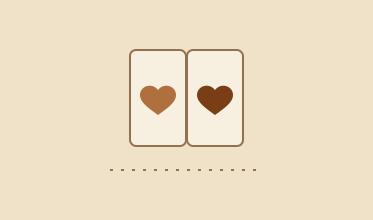
The quick love spread is a two-card draw aimed specifically at relationship questions. It follows the same short method as the general two-card check-in, with positions written for matters of the heart instead of an open topic. Read it as a way to check in on your own headspace around a relationship — not as a way to find out what someone else is privately feeling.
The Two Positions
- First card — Where you stand emotionally. Not the relationship’s status, your own current state going into it: hopeful, guarded, exhausted, settled.
- Second card — What’s asking for attention. A pattern, worry, or unspoken need that’s shaping how you’re showing up in this situation right now.
Read the two cards as one line about you, not a scorecard on the relationship itself: “this is where I stand, and this is what’s actually asking for my attention.” That framing matters — a love spread that quietly turns into a spread about someone else’s intentions has drifted from what the cards can actually tell you.
What This Spread Won’t Tell You
It won’t confirm whether someone loves you, whether an ex is thinking about you, or when a specific relationship milestone will happen. A card reading reflects your own perspective on a situation you’re already living inside — it has no way to report on another person’s private feelings, and no spread on this site claims otherwise. If the question you’re carrying is really “does this person feel the same way I do,” the more useful version to ask the cards is “what am I noticing in myself about this,” which the two positions above are built to answer.
A Worked Example
Question: “How am I really doing with this new relationship?” First card: the Knight of Cups — genuinely open, a little swept up, leading with feeling rather than caution. Second card: the Seven of Pentacles — a quiet question about whether the effort you’re putting in is actually building toward something, or just being spent.
Read together: you’re leaning in with real feeling, and underneath that there’s a fair question about whether the investment is paying off in kind. That’s not a verdict that the relationship is doomed or destined — it’s a specific, useful prompt to check in with yourself honestly about reciprocity, which is a conversation worth having with yourself before it becomes one you need to have out loud.
Using This Spread Responsibly
A quick love spread is not a substitute for an actual conversation with the person involved, and it’s not a diagnostic tool for a relationship in real distress. If what you’re facing involves safety, abuse, or a decision that needs professional support, a card draw is the wrong tool entirely — please reach out to a qualified professional or a trusted person in your life instead. See our disclaimer for how this site frames its limits on relationship questions specifically.
Setting Up a Clean Draw
Before you shuffle, get specific about which relationship question you’re actually asking — a new connection, a long-term partnership, or something already ending read very differently, even with the same two positions. Sit for a moment with how you’re genuinely feeling before you draw, rather than the feeling you think you’re supposed to have. That honesty is most of what makes this small spread useful.
- Name the relationship, not just “love.” A question about a specific person or situation gives the cards a clearer target than a generic “what does my love life look like.”
- Keep the second position about you. “What’s asking for attention” should describe your own pattern or need, not a prediction about the other person’s next move.
- Give yourself permission to not like the answer. A card naming a real insecurity or an uncomfortable pattern is doing its job, not failing at it.
- Follow up with the person, not just the cards. If the reading surfaces a real question, the next useful step is usually a conversation, not another draw.
Frequently Asked Questions
Can I ask about someone I haven’t met yet?
You can, but reframe the question around yourself: “what am I bringing into whatever comes next” tends to give a more useful read than “who will I meet,” which the cards have no way to answer specifically.
What if I want to ask about getting back together with an ex?
This spread can reflect your own current feelings about that situation honestly, but it can’t tell you what your ex wants or predict a reunion. If the question is really “should I reach out,” the three-card line — past, present, next step — usually gives a clearer answer than squeezing that question into two positions.
Is a love spread different from a general spread?
Only in the wording of the positions, not in the underlying method — this page and the two-card check-in share the same two-position structure described on the Nightgate Tarot homepage, aimed at a different kind of question.
Can this spread guarantee a relationship will work out?
No spread on this site guarantees an outcome, and love questions are exactly the ones where that limit matters most. Treat every reading here as a way to think something through, never as a promise about what happens next.
How is this different from asking a general question about my relationship?
The wording of the two positions keeps the reading anchored to your own emotional state rather than letting it drift into speculation about someone else. A more open question — like the one covered by the three-card line — gives you a past/present/next-step view of a relationship situation, while this spread stays deliberately narrow: how you’re standing emotionally right now, and what’s genuinely asking for your attention underneath that.